
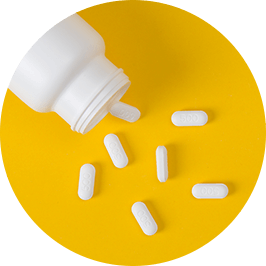
Constipation can be a side-effect of some medications including:
There are lifestyle changes you can take that may help relieve constipation associated with taking certain medicines, such as increasing fluid and fibre in your diet and increasing your level of activity. However, when this is not enough, or not possible, constipation treatments may be necessary.
Coloxyl offers a range of laxatives that can be selected based on the severity of your constipation and whether you are looking for gradual, or faster overnight relief.
Talk to your doctor or pharmacist first before taking any constipation treatment. They will be able to advise you on a suitable treatment to manage your constipation. Occasionally, constipation may be a symptom of another problem. It is important to speak to your healthcare professional if constipation persists.
Welcome to the Coloxyl constipation symptom and solution checker
The Coloxyl “Am I constipated” tool will help you to determine if you may or may not be constipated based on your response to 4 simple questions regarding your bowel movements.

Find answers to commonly asked questions about constipation and its causes, and which Coloxyl product is suitable for you.
Some medicines that are used to treat diarrhoea or nausea may cause constipation.
Both anti-diarrhoea and anti-nausea medicines may act on your gut function.
For example, the anti-diarrhoea medicine loperamide works by slowing the movement of fluids and electrolytes into the bowel and slowing gut motility. That leads to fewer bowel movements and harder stools. Too much slowing down of the bowel or hardening of stools could result in constipation.
To find out more, you can chat with your pharmacist or GP about which medicines may cause constipation.
Medicine-induced constipation is when a medicine that you’re taking causes you to become constipated. This includes both prescribed medicines and any medicines you buy without a prescription from the pharmacy, supermarket or health food shop.
Medicine-induced constipation usually lasts as long as you are taking the medicine that’s causing it.
Before you start taking any medicine, it’s a good idea to check the label to be aware of any potential side effects. If you’re still not sure, you can ask your pharmacist or doctor. They can also help you understand how to manage constipation while you’re taking a medicine that causes it.
Don’t stop taking a medicine you’ve been prescribed without checking with your GP or pharmacist.
It’s common to be constipated after surgery. It may be related to the type of surgery you had, your fluid intake, the pain you have, or to the pain relief used during and after surgery.
Your doctor is best placed to advise you about how to manage constipation post-surgery.